
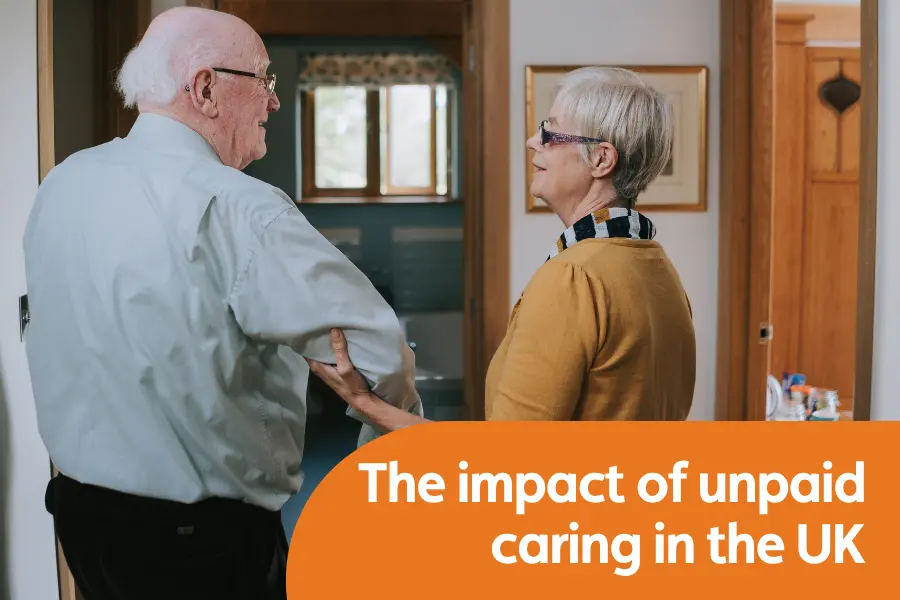
Unpaid Carers are providing support on a scale comparable to a second NHS. Across the UK, millions of families are providing care for older relatives every day. They organise medication, cook meals, manage appointments, assist with mobility, and monitor safety at home. For many people, caring begins gradually. A weekly visit becomes a daily phone call. Then comes help with shopping, then transport to hospital appointments, and eventually, more regular support.
This type of unpaid care has become a central part of the UK’s support for its ageing population.
Unique Senior Care’s UK Elderly Care Statistics hub was created to bring together the most up-to-date national data on ageing, care needs, and family support in one place. One section of the hub focuses specifically on unpaid Carers UK data, revealing the scale of the support families provide and the pressures many of them face.
The scale of unpaid care in the UK is difficult to overstate. New research from the Centre for Care, published in partnership with Carers UK, estimates that the economic value of unpaid care is now around £184 billion per year.
To put that into context, the combined NHS budget across the UK was approximately £189 billion in 2021–2022. This value has increased significantly over time. Since 2011, the estimated contribution of unpaid Carers has risen by £64.9 billion, reflecting the growing number of hours families are providing care across the UK. It reflects the enormous amount of time, energy, and responsibility families carry every day.
Behind that number are real households balancing care with work, finances, and their own health.
The scale of unpaid caring in the UK
Across the UK, families form the invisible foundation of the care system. Many older people can remain in their own homes because someone close to them steps in to help with everyday tasks.
In the early stages, caring often begins with small acts of support. A daughter might pick up prescriptions after work. A son may manage bills or organise medical appointments. A neighbour may check in each evening to make sure someone living alone is safe.
Over time, those responsibilities often grow. What begins as occasional help can become daily supervision, physical assistance, emotional support, and constant coordination of medical needs.
For millions of families, caring gradually becomes part of everyday life. But the numbers behind this reality are significant. Research from the Centre for Care, published in partnership with Carers UK, estimates that the economic value of unpaid care in the UK is now around £184 billion per year.
To put that into perspective, the combined NHS budget across the UK was approximately £189 billion in 2021–2022. That means the care provided by families across the country now rivals the scale of the NHS itself. And that support is growing.
Carers UK research has found that 2.6 million people have given up work to care for a loved one. That equates to roughly 600 people leaving employment every day to take on caring responsibilities.
Over the course of a year, that means more than 200,000 people step away from paid work to support family members who need help. The experience of unpaid Carers across the UK varies, but the pressures described here are widely shared.
Most families never plan for this transition. Caring responsibilities tend to develop slowly, often beginning with occasional support before gradually becoming difficult to manage alongside full-time employment.
Related Reading: Loneliness in older people: UK statistics and what families should know
The impact on work and financial security
Caring responsibilities often reshape working lives in ways that are not immediately visible. Census data shows that nearly 3 million Carers aged 16 and over in the UK are currently in paid employment. At the same time, over one million working-age carers are not in paid work, often because the demands of care make it difficult to maintain employment.
Even when Carers remain employed, their working patterns frequently change.
The 2021 Census for England and Wales found that 38% of Carers in employment work part-time, compared with 29% of non-Carers. Reduced hours may allow someone to attend medical appointments, manage medication schedules, or be available during emergencies.
The longer caring continues, the greater the impact can become. According to the Carers UK State of Caring 2025 survey:
- 69% of Carers said they had not focused on their career as much as they would have liked
- 61% said caring responsibilities affected the type of job they could take
- 21% reported accepting a lower-paid or more junior role that better fitted their caring responsibilities
Research from WPI Economics has also found that being out of work is the strongest predictor of poverty for unpaid Carers. For many families, caring is an act of love and responsibility. But the financial consequences can be significant.
Related Reading: Is it time for care at home? Free care needs assessment
What £184 Billion of Care Actually Looks Like


Large economic figures can feel abstract. The idea that unpaid care is worth £184 billion a year might sound like a statistic from a government report rather than something happening in ordinary homes.
But that number is made up of millions of everyday actions. It’s the daughter who checks in every morning before work to make sure her father has taken his medication. It’s the husband helping his wife safely move around the house after surgery. It’s the neighbour who drops in during the evening to ensure someone living alone has eaten properly. It’s the son rearranging his working hours so he can drive his mother to hospital appointments.
Across the UK, these small acts of care are happening constantly. When combined, they form a vast network of support that enables countless older people to remain in familiar surroundings.
Without this support, the pressure on hospitals, care homes, and community services would increase dramatically.
Related Reading: Why choosing care feels so hard. Coping with guilt when arranging care for a loved one
When caring becomes difficult to manage alone
Many family Carers cope remarkably well in the early stages. Support may involve occasional visits, phone calls, or help with errands.
But as health conditions progress, the situation often becomes more demanding. Caring for an older relative may eventually include:
- Helping with mobility and transfers
- Managing medication schedules
- Supporting personal care routines
- Monitoring memory or cognitive changes
- Being available in case of falls or emergencies.
These responsibilities can quickly expand into many hours of care every week. For families who are also managing jobs, children, or their own health needs, the pressure can become overwhelming.
This is often the point at which people begin to explore additional support options, such as hourly care services or live-in care, allowing older adults to remain safely at home while reducing the strain on family members.
The Sandwich Generation: Balancing Work, Children, and Care


Within the wider population of unpaid Carers is a group often described as the sandwich generation. These are working-age adults who are supporting ageing parents while also managing careers and, in many cases, raising children or helping young adults who still live at home.
According to the Office for National Statistics (ONS), there are around 1.4 million sandwich Carers in the UK aged between 16 and 64. Just over half of them (51%) are aged 45-64, a period of life when careers, financial commitments, and family responsibilities are often already at their peak.
For many people in their forties and fifties, this creates an intense balancing act. A typical weekday might involve preparing children for school, commuting to work, attending meetings, answering messages from doctors or care services, and then visiting an older parent in the evening to help with meals, medication, or household tasks.
Weekends often become filled with practical responsibilities such as grocery shopping, managing paperwork, arranging home maintenance, or accompanying parents to appointments.
Most people take on these roles willingly out of love and responsibility. But the practical demands can accumulate quickly.
Related Reading: Why families delay arranging care, and why starting earlier can help
How caring responsibilities grow over time
For many families, caring does not begin with a clear decision. Instead, it often develops gradually.
A parent might first ask for help with grocery shopping after a minor fall. Driving may become difficult, so lifts to hospital appointments become more frequent. Managing paperwork or bills may require support. Over time, daily tasks such as cooking, cleaning, or remembering medication can also become challenging.
At that point, caring may shift from occasional help to something much more regular. A working adult may suddenly find themselves juggling two demanding roles: their professional life and their responsibilities as a family carer for an elderly parent.
Because this progression is usually gradual, many families never have the opportunity to plan properly for it. Support structures often develop reactively rather than proactively.
The financial pressure many Carers face
The demands of caring can also affect financial stability. Research has shown that caring for an elderly relative often results in a significant loss of income, particularly for midlife individuals who reduce working hours or leave employment entirely.
Recent estimates suggest the average monthly loss of income for Carers is around £522, equating to approximately £6,268 per year. For those in the sandwich generation, this loss can be especially challenging. Many are in their peak earning years, while also managing mortgages, supporting children through education, and trying to save for retirement.
Reducing working hours or stepping away from career progression at this stage can have long-term consequences for financial security.
Related Reading: How quickly can home care be arranged, and what are your emergency support options?
Managing multiple caring priorities at once
Sandwich Carers are not simply balancing work and care. They are often managing multiple forms of care at the same time. A parent might need help with mobility or memory problems, while children still rely on them for emotional support, transport, or financial stability. Some may also be supporting young adults who are still living at home due to rising housing costs.
This creates a constant pressure on time, energy, and attention. It can mean answering work emails while coordinating medical appointments. It can mean leaving the office early to collect children from school before heading across town to check on a parent.
Over time, this kind of pressure can lead to exhaustion, stress, and feelings of guilt about not being able to give enough attention to everyone who needs it. For many families, exploring professional care, such as hourly or live-in care, becomes an important step toward restoring balance and ensuring loved ones receive consistent support.
Related Reading: A complete guide to home care in the UK: What it is, how it works, and what families can expect
The health cost of being an unpaid Carer
Behind the statistics about unpaid care are millions of families managing significant physical and emotional pressure.
Caring for someone you love can be deeply meaningful. But when that care becomes a daily responsibility alongside work, family life, and financial commitments, it can also take a toll on the health and well-being of the person providing the support.
Many Carers prioritise their loved ones’ needs so completely that their own health gradually slips down the list. Over time, the effects can become difficult to ignore.
Physical health pressures
Caring often involves much more than organising appointments or helping with household tasks. As health needs increase, family Carers may find themselves assisting with mobility, lifting, transfers, or helping someone move safely around the home.
These responsibilities can place real physical strain on the body. According to research from Forward Carers (2025), 42% of unpaid Carers say their physical health has worsened since they began caring. A worrying 20% of unpaid Carers said they had experienced an injury caused by their care responsibilities.
Physical health can deteriorate for several reasons. Helping someone in and out of bed, supporting them when walking, or assisting with personal care can involve repeated lifting and awkward movements. Without training or specialist equipment, these tasks can lead to back pain, muscle strain, and fatigue.
Sleep disruption is also common. Many Carers wake during the night to check on a loved one, help them to the bathroom, or respond to confusion caused by dementia or other health conditions. Over months or years, the physical toll can gradually build.
Related Reading: How to start the care conversation with elderly parents
Stress and emotional strain
The emotional impact of caring can be just as significant. The State of Caring Survey (2025) found that 74% of Carers reported feeling stressed or anxious due to their caring responsibilities.
For many families, the emotional pressure does not come from caring itself. Supporting someone you love can feel deeply worthwhile. Instead, the stress often comes from everything that surrounds it. There may be uncertainty about how a health condition will progress. Families may worry about finances, work commitments, or whether they are doing the right things to keep someone safe at home.
Some Carers also experience guilt. They may feel they’re not giving enough time to their children, their partner, or their own well-being while trying to support an ageing parent. This emotional balancing act can become exhausting over time.
When exhaustion and burnout begin to appear
Many Carers push themselves for long periods before recognising how much pressure they are under. It can start with small changes. Someone may feel constantly tired, struggle to concentrate at work, or lose time for hobbies and social life. Regular exercise or medical appointments for their own health may be postponed.
As caring responsibilities increase, the feeling of always being “on call” can become overwhelming. Family Carers often describe living with a constant background awareness that something might go wrong. A fall, confusion during the night, or a sudden health issue can happen at any time.
When that responsibility is carried alone for long periods, exhaustion and burnout can begin to develop. This is one of the reasons many families eventually explore additional support, starting with hourly care services before eventually moving on to full-time live-in care, allowing loved ones to remain safely at home while reducing the physical and emotional strain on the family.
Related Reading: How to know when it’s time to get care at home
When Family Care Becomes Unsustainable
Many families prefer to support loved ones themselves for as long as possible. In the early stages, this approach often works well. However, the statistics show that caring responsibilities can become difficult to sustain when they begin affecting health, employment, or household finances.
Signs that support may be needed can include exhaustion, disrupted work patterns, growing stress levels, or safety concerns for the person receiving care. Recognising these signs early can allow families to explore additional support before the situation becomes overwhelming.
Sharing responsibility with professional care
Professional care services are often introduced gradually. For some families, this may begin with hourly home care, providing help with tasks such as personal care, meal preparation, medication reminders, or companionship during the week.
In other situations, particularly when someone requires continuous support or supervision, live-in care can provide a consistent presence at home while allowing older adults to remain in familiar surroundings.
Both approaches are designed to support families rather than replace them. Professional Carers can share the responsibility, helping to protect the well-being of both the person receiving care and the family members supporting them.
Understanding the next step
Deciding when to introduce additional support can be difficult for families. Many people are unsure whether their situation has reached the point where professional care might help.
Unique Senior Care offers a free care needs assessment designed to help families understand how things are going day to day and whether care at home could make life safer, easier and more reassuring. In just a few minutes, you will receive personalised guidance to help you understand what the next step might look like.
If caring responsibilities are starting to feel overwhelming, it can help to talk through the situation with someone who understands the options available. The team at Unique Senior Care offers calm, practical guidance to help families explore care solutions that support both their loved one and the people caring for them.
Article Sources
- Carers UK. “Valuing carers”. November 21st, 2024
- Carers UK. “Key facts and figures about caring.” Accessed March 18th, 2026
- MoneyWeek. “‘Sandwich generation’ carers losing £6,000 a year to support elderly relatives”. January 27th, 2026
- Forward Carers. “State of Caring survey 2025”. November 10th, 2025

Jo joined Unique Senior Care as a Carer in 2011, transitioning from a nursing background. With 25 years of experience in health and social care, including mental health and children with disabilities, Jo has embraced numerous growth opportunities within the company.
Passionate about learning and development, Jo earned a Level 5 Diploma in this field and is committed to equipping teams with the skills needed for outstanding care.
Jo’s qualifications include advanced training in people handling, risk assessment, safeguarding, basic life support, first aid, health and safety, and dementia care. Jo has also completed numerous workshops and CPD courses, such as the SCIE’s Co-Production webinar.
These accomplishments reflect Jo’s dedication to fostering a culture of safety and excellence in care.