

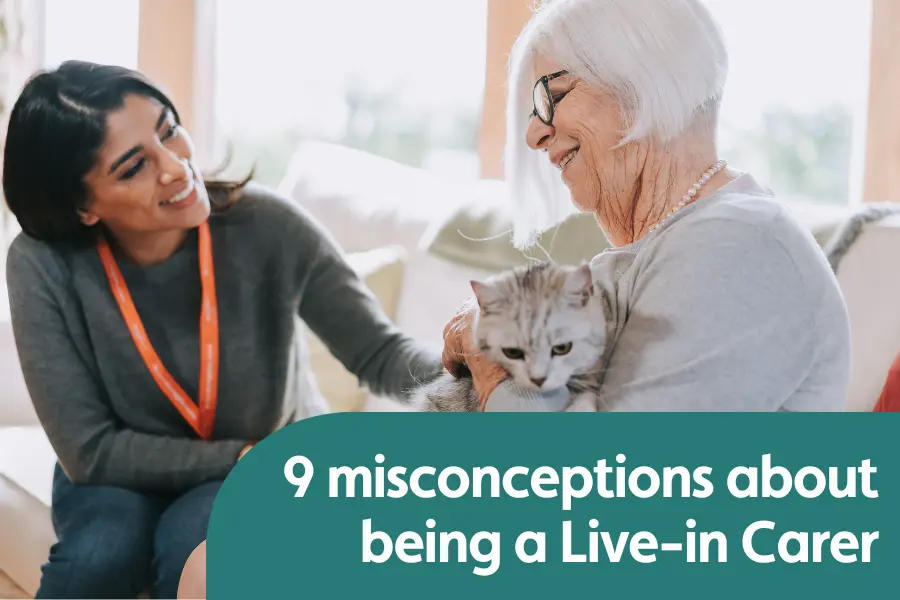
Summary: This blog explores what being a live-in carer really involves by addressing nine of the most common misconceptions about the role. From daily responsibilities and work-life balance to career development and emotional connection, it offers a clear and honest picture of what to expect from the role.
Live-in care is a unique role where you actually move into your client’s home for an extended period – be it two weeks, three weeks, or sometimes longer. If you’re currently a carer and weighing up whether it’s right for you, you might be thinking ‘what does a live in carer do?’. There are often lots of misconceptions about this job, from never having time off to feeling isolated. In this blog we’re going to look at these misconceptions and what it’s like being a live in carer in reality.
Whether you’re just starting to explore how to become a live in carer or you’re already experienced and wondering if the pros and cons of being a live in carer make it the right fit for your future, this blog will help you get a clearer picture.
1. “You’re working non-stop with no boundaries or time off”
Reality: This is one of the most common worries, but it simply isn’t true. While you’re living in the same home as the person you care for, it doesn’t mean you’re constantly working. You’ll have two hours off every day, where you’re completely free to pop out for a coffee, enjoy a hobby, or just relax in peace.
Many carers also find they build a strong, natural bond with their client. That means there’s often plenty of gentle downtime during the day, whether it’s heading out for a short walk together, popping to a local café, or watching a favourite TV show. Yes, you are present in the home for most of the day, but that’s not the same as being on task all day. Good providers ensure your rota gives you time to recharge properly, and that you’re never expected to run on empty.
2. “You lose your independence – you have no life of your own”
Reality: Many carers say the opposite. In fact, live-in care can offer more stability and breathing space than some hourly roles. You don’t have to worry about rent, bills, or commuting. Your evenings are usually quiet, and during the day you’ll have protected breaks to unwind, call loved ones, read, or enjoy your hobbies.
When a placement ends, many carers also value the extended time off before starting the next one. Some use that break to travel, spend time with family, or simply rest and recharge. It creates a rhythm that feels very different from traditional shift work and offers more balance for many.
And while you’re in placement, you’re still living your life. Many carers enjoy meaningful time with their clients. You’re part of someone’s daily world, but you’re still very much yourself.
3. “It’s too intense – I’ll be left alone to handle complex situations”
Reality: You’re never left to cope alone. You’ll have a Care Manager, on-call support, and clear boundaries. If a client’s needs change, or things feel unsafe, you’re not expected to carry that alone. You’ll always be backed by a team who knows you and knows the client.
And in many ways, live-in care can feel calmer than traditional visiting care. You’re not rushing between houses or trying to juggle several care plans in your head. You have time to settle into a rhythm with one person and shape the day in a way that works for both of you. That means less stress, more presence, and the chance to build real connection.
You’re empowered to be the expert, consistent presence that someone truly needs. And for many carers, that’s what makes it so rewarding.
4. “It’s only for people with advanced medical or dementia training”
Reality: You do need at least a year of hands-on care experience, but you’re not expected to be a nurse or a specialist. Some clients will have more complex needs, but not all of them. What’s important is that you’re compassionate, reliable, and open to learning.
Our award-winning training will fully equip you both practically and theoretically. If you want to specialise in areas like dementia or end-of-life care, we’ll support you to get there. And if you’re matched with someone with more advanced needs, you’ll never be left to manage alone. We work closely with district nurses and other professionals to make sure you feel confident and supported in your role.
Live-in care is about being a steady, caring presence, not a medical expert. You bring your experience, and we’ll back you every step of the way.
5. “It’s too isolating – I’ll feel cut off from the world”
Reality: This is a real concern for many carers thinking about live-in care, especially if you’re used to busy team environments or seeing lots of different people throughout your day. But live-in care offers a different kind of connection — quieter, deeper, and often more fulfilling.
You’ll be supported by a dedicated Care Manager, regular check-ins, and a wider team that’s always there when you need them. You’re never left to manage on your own. And while you may be the only carer in the home, you’re not alone. You’ll build a relationship with your client that often feels like genuine friendship. Over time, you build your own rhythm and routines together.
You’re not juggling multiple clients or constantly moving between visits. You’re present in one home, able to focus fully on one person, and well supported by a team that knows you and your client. It’s not always easy work, but it is meaningful. And you’re never doing it alone.
Just hear from Angie and her client Mike. They’ve built a fantastic bond and a routine that works for them both.
6. “You’re just there to clean and cook”
Reality: Live-in care is about so much more than keeping things tidy or putting dinner on the table. It’s a rounded, people-focused role where every day can look a little different. Yes, you’ll support with light housework and cooking but that’s only one part of what you do.
You might be helping with personal care, keeping the home comfortable, supporting your client to continue their hobbies, popping to the shops together, or heading out to an appointment. Some days might be busier, others quieter – but you’re there to help someone live the life they want in their own home.
You’re not stuck doing practical tasks all day. You’re offering steady support, and making someone feel safe, comfortable and cared for. And that’s what truly makes the role worthwhile.
8. “It’s hard to switch off – I’ll be in ‘carer mode’ all the time”
Reality: This is something many carers worry about, and it’s a fair concern. When your workplace is also your home, it can be hard to imagine how you’ll ever fully unwind. But that’s exactly why the structure of live-in care matters.
Your day is planned with protected time off, so you can step away, recharge, and focus on yourself. Regular breaks are a standard part of the role, not a luxury. You’re not expected to be available around the clock, and you’re certainly not doing it alone.
The one-to-one nature of live-in care means the day has a natural rhythm. You’re able to build calm, consistent routines with your client, which helps both of you feel more settled. And with ongoing support from your manager and team, you’ll always have the space you need to rest, recover, and stay well.
9. “It’s not a real career move – just a stopgap”
Reality: This couldn’t be further from the truth. In fact, 70% of our leadership team started their journey as carers and have built their careers around their strengths and goals. Whether you’re interested in specialising, moving into leadership, or simply continuing to grow in your role, live-in care offers a meaningful and recognised path forward.
You’re certainly never ‘just’ a carer. Your role is highly skilled, and the impact you have is deeply valued – by your client, their family, and the wider care team. From developing expertise in dementia or end-of-life care, to mentoring others or stepping into care management, the opportunities are there if you want them.
This isn’t a stopgap. It’s a respected, long-term profession where your work truly matters.
Anne, one of our experienced live-in carers, shares her journey from supporting a friend in need to becoming a full-time carer and finding purpose in the smallest moments — from hearing a client greet her in the morning to being by their side in their final days. Her story is a powerful reminder of just how rewarding and meaningful this role can be.
Thinking about live-in care?
If you’ve got at least a year of hands-on care experience and want something more meaningful, live-in care could be the next step that truly fits who you are. You’ll be supported, valued, and part of a team that genuinely cares about your wellbeing and development.
We’re growing, and we have more and more clients who need kind, dependable, and dedicated people like you. People who can brighten their days and offer the consistent, compassionate care they need to keep living well at home.
If you’ve been wondering why you want to be a live in carer, or even what’s it like being a live in carer day to day, we’d love to show you just how fulfilling it can be. And if you’re curious about how to become a live in carer, we’ll guide you from your first conversation to your first placement.
Explore our live-in care roles or get in touch for a friendly chat. We’ll help you decide if it’s the right fit for you, and show you what’s possible when the right role meets the right person.

Lucy is an experienced professional with over 20 years of experience in the care sector. Currently appointed as the Director of People at Unique Senior Care, she is responsible for shaping and overseeing Recruitment, Talent Management, Leaning and Development, Retention and Human Resource strategies. Lucy is accountable for aligning People policies with our strategic business objectives and ensuring a positive and inclusive workplace culture.
Lucy has a bachelor’s degree and has held various significant roles, including Talent Acquisition Director at A Wilderness Way, Head of Recruitment at Prestige Nursing & Care, and The Good Care Group. She enjoys impacting the company’s most important resource—its people—and witnessing the positive differences made for clients and colleagues daily.