
Updated September 2025
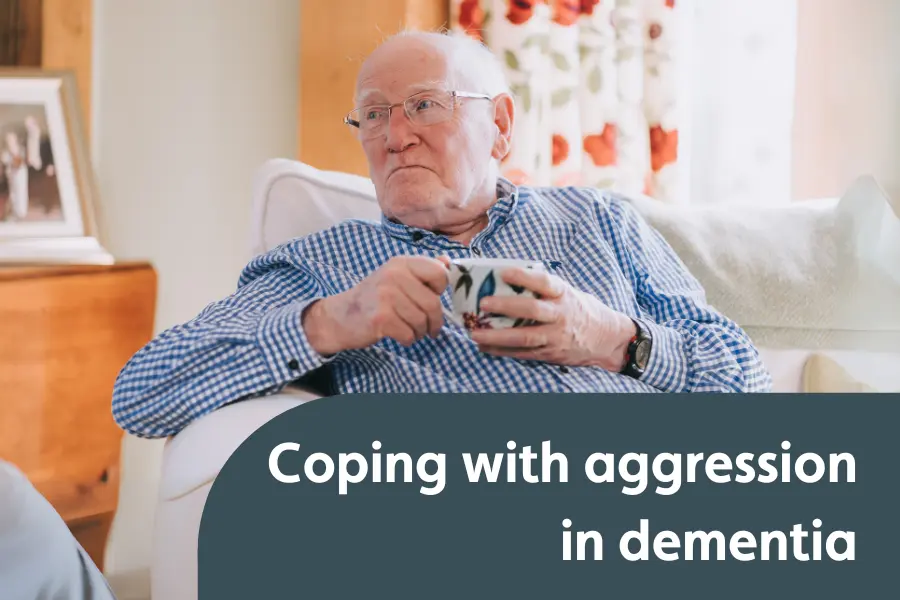
Aggression in dementia might be verbal or physical, with behaviours ranging from shouting, swearing, or accusing to pushing, grabbing, or hitting. It can come on suddenly or build up slowly over time.
Dementia aggression can stem from many factors. It often happens during personal care, when someone feels confused or overwhelmed, or when their usual routine is disrupted. Sometimes it seems to come out of nowhere.
When a person with dementia becomes restless, agitated, irritable, or confused as the evening sets in, it’s often known as sundowning. Sundowning is more common in the middle and late stages of dementia, though it can happen at any time. Unfortunately, it can also be a vicious cycle — the aggression may continue into the night, making it difficult for a patient or loved one to sleep. Then exhaustion sets in again the following day, exacerbating their symptoms.
Whatever the trigger for aggression, there is one thing all combative dementia patients have in common. They’re not being difficult on purpose. It’s usually a sign that something isn’t right, and they can’t find the words to explain their needs or emotions, leading to frustration and agitation.
Why does dementia cause aggression?
Aggression is often a sign of distress. It might be caused by pain, confusion, fear, frustration, or changes in routine. The person may be unable to explain what they need, so it shows through their behaviour.
While not a symptom in the way memory loss is, aggressive behaviour and dementia often go hand in hand. As the brain changes, it’s to be expected that the way someone experiences the world changes, too.
Aggression is often a sign of distress, which can happen in many situations. When a person with dementia can’t explain what they need or how they’re feeling, it often shows through their behaviour.
Some of the most common causes of aggressive behaviour include:
- Being in physical pain or discomfort (for example, they have constipation, joint pain, or a urinary tract infection (UTI)
- Confusion about where they are or who’s helping them
- Fear or embarrassment
- Overwhelm because of noise, movement, or too many other people
- Frustration over not being able to do tasks they used to manage easily
- Depression or stress
- Poor sleep
- Sudden changes in routine
- Pressure to do something that dementia has made it hard or near-impossible to do, such as remember events or people
- Changes to familiar places or people
- Feeling lonely
- Interactions between medications.
What to do when dementia patients get aggressive
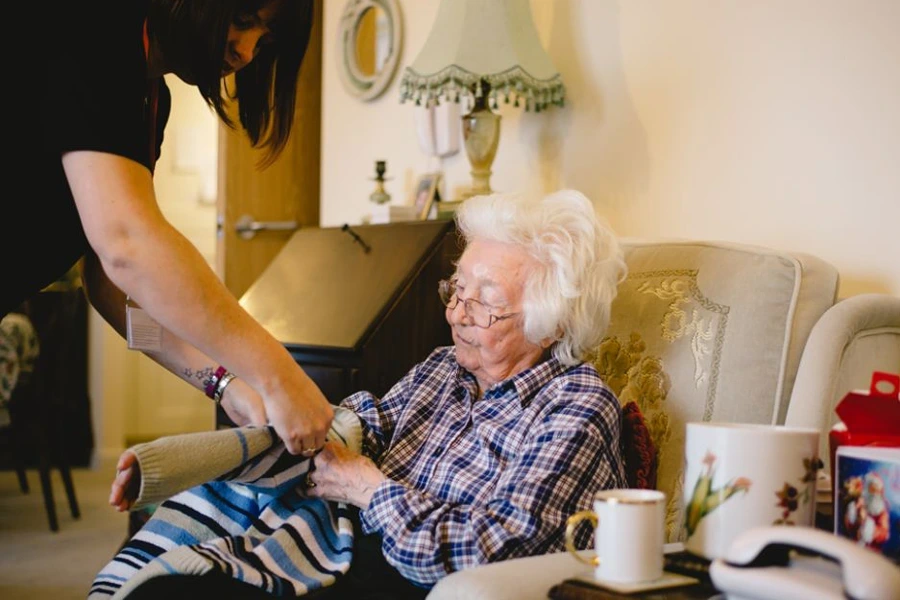
Seeing a loved one or patient act aggressively can be frightening and confusing, and you might not know how to react. Below, we outline steps we recommend you take in the moment, when the situation becomes dangerous, and after the aggressive episode has passed.
Dealing with aggressive behaviour in the moment
It’s hard not to panic when someone lashes out, but staying calm and steady can make all the difference.
Try to:
- Take a deep breath, and remind yourself they are likely not acting this way on purpose.
- Speak gently and keep your voice low.
- Give them space, if it’s safe to do so.
- Use short, reassuring phrases like "You’re safe" or "I’m here to help."
- Try to keep your body language open, for example, by keeping your arms at your side or placed on your lap.
- Reduce sensory input by clearing noise, clutter, and harsh lighting.
If someone’s aggressive behaviour is triggered by frustration over trying to do a certain activity or task, it can be helpful to try to break it down into smaller, more achievable steps and offer clear choices instead of complex instructions.
However, you should also consider whether it needs to be done at that moment. If not, gently steer them away from the situation or distract them with something familiar, such as a photo, a cup of tea, or music they like. Don’t push; it’s okay to pause and try again later.
Avoid arguing or trying to explain, as they may be unable to process it. As dementia progresses, patients struggle to understand logic and persuasion. Trying to argue or reason with someone acting out will only cause you both to be distressed, and reacting angrily can make the situation worse.
When a dementia patient gets combative, your first instinct might be to restrain them to prevent them from hurting themselves or to reach out your hand to reassure them you are there. Be careful when initiating physical contact, as it may come across as threatening.
When dementia-related aggression becomes too much
Sadly, it’s not always a simple case of distracting someone with dementia-related aggression, and the situation might get worse or be volatile from the outset. If they are physically violent or you feel frightened, it’s important to protect yourself. Remember, you are not expected to manage this alone.
If you’re ever at risk of being hurt or you’re worried about someone’s safety:
- Call 999 in an emergency.
- Call 111 for advice on urgent but non-emergency care.
- Speak to your GP or local Adult Social Care team. They can carry out a safeguarding assessment and help put extra support in place.
Asking for help doesn’t mean you’ve failed. It means you're looking after both of you.
What to do when the aggressive behaviour has passed
It’s normal to feel shaken or upset, so give yourself a moment. Try not to blame your loved one. They might not remember what happened and become confused, which can trigger further aggression.
Also, and this is critical, do not blame yourself for reacting, or not reacting, in a certain way. Instead, think back over what might have triggered it.
Were they tired or hungry, or in pain? Has there been a lot going on? Consider not just what’s happening in your loved one’s life but in the wider environment, too. If a lot of people have been coming and going, or there’s been a recent change or upheaval, your loved one might have picked up on it, even if they don’t fully understand it.
If sundowning might be the cause of the aggression, sticking to a routine can be helpful, although that’s sometimes easier said than done! Discouraging long naps or dozing during the day can help them keep a more consistent sleep schedule, as can going outside (or at least sitting by a window) to get some sun, and avoiding caffeine late in the day.
Some families find it helpful to keep a simple behaviour diary. This needn’t be anything fancy or structured. Taking a few notes on what happened (the aggressive behaviour itself) and what was going on (what might have caused it) can help you spot patterns and triggers. It can also help you keep track of how often your loved one gets agitated and whether the behaviour is getting worse or more frequent over time.
Even if you calm your loved one down fairly quickly and they weren’t physically violent, it can still be beneficial to talk it through with someone else. You’ll be no good to anyone if you keep your emotions bottled up, and nobody expects you to shoulder it all on your own. Support is available, whether that’s your GP, a counsellor, a dementia support worker or support group, other family members and friends, or respite care.
Can medication help treat aggression in people with dementia?
Medication isn’t usually the first step for treating aggression caused by dementia. If someone is at risk of harming themselves or others, short-term treatment might be considered, but only alongside regular reviews.
If you want to explore whether medication might be suitable, or if your loved one is already on medication, speak to a GP or memory clinic. They can review any current medications, advise on any side effects or interactions, and support you with holistic alternatives.
Tips for dealing with dementia agitation from a Specialist
Most of the time, non-drug approaches work better and carry fewer risks. Treating aggression in dementia patients through a non-pharmacological approach means looking at the whole picture, which means considering the impact of pain, sleep, hearing or vision problems, environment, routines, and how care is given.

Jayne Vale, our Dementia Specialist, has supported many families through difficult moments like these. She says the way we approach care can have a big impact on how someone with dementia responds.
"Sometimes, it’s just about slowing down and giving that person space to feel safe," says Jayne. "People often react out of fear or confusion, not anger. If we respond calmly and patiently, we’re more likely to bring them back to a place of comfort."
Jayne recommends:
- Communicating one step at a time. Try “Let’s sit down,” not “Come and sit so I can help with your shoes.”
- Avoiding sudden touch or movement, and always explain what you’re about to do.
- Sticking to familiar routines as much as possible. Consistency can be comforting and reassuring, which can reduce anxiety and confusion.
- Taking breaks before you hit your limit.
She also reminds families not to take aggression personally. "It’s often not about you," she says. "It’s about how that person is experiencing the world in that moment, and how we can make it feel safer for them."
You’re not on your own: Support is available for coping with dementia aggression
Dementia doesn’t just affect the person. It affects the whole family, who are often left to put on a brave face and soldier on. In reality, when a loved one with dementia becomes irritable or, worse, violent, it can be upsetting, exhausting, and confusing. It’s easy to start blaming yourself or wondering if you’re doing something wrong.
You’re not. This is something many families go through.
Getting the right support, whether that’s advice from a Dementia Adviser, help from a Caregiver, or time away from caring, can make all the difference.
Support can take many forms, depending on your and your loved one’s needs. For one family, this might look like regular home care visits, so you can run errands.
Another carer may need temporary respite care so they can take some time for themselves. There is no shame in this. You can’t give your best self to your loved one when you’re running on empty, and you shouldn’t feel guilty for taking the time you need to look after yourself.
A long-term solution might be to consider a care home or live-in care, allowing your loved one to get the tailored support they need from specialist Caregivers with experience caring for aggressive dementia patients.
Help such as counselling, carer support groups, and advice from specialist organisations can often be accessed through your local social prescribing service.
Read more: Help and Resources for Dementia Carers | Unique Senior Care
Moving forward with support and understanding
When a loved one has dementia and is aggressive, no matter how severe, it can be distressing for families, but it can be managed. With proper understanding, small changes, and steady support, families often find that things improve.
You don’t need to have all the answers, and you don’t need to do it all on your own. You just need to take things one step at a time.
If you're worried about a loved one's behaviour or would like to explore professional dementia and Alzheimer’s support at home, we're here to help. Get in touch with our team for a friendly chat about what’s happening and how we can support you.
Download Your Free Guide to Dementia Care Today...
Inside you’ll find clear explanations, practical tools, and step-by-step guidance to help make life easier for you and your loved one.

Jayne is a highly experienced dementia care specialist with over 17 years in the field. She began her career in 2004, progressing through roles such as hourly visiting carer, coordinator in the live-in care department, and lead dementia trainer. Jayne completed Specialist Practice in Dementia (Mental Health) at Worcester University and has developed bespoke dementia training for managers, carers, and family members.
Recognised for her contributions, Jayne received the National Dementia Care Personality award at the Great British Care Awards 2012. She has also been a speaker at numerous conferences and reviewed dementia-related publications.
Now with Unique Senior Care, Jayne works as a recruitment consultant, recruiting carers both in the UK and overseas, contributing to dementia training for both staff and families. Jayne’s dedication to compassionate, person-centred dementia care is evident in her extensive experience and numerous achievements.